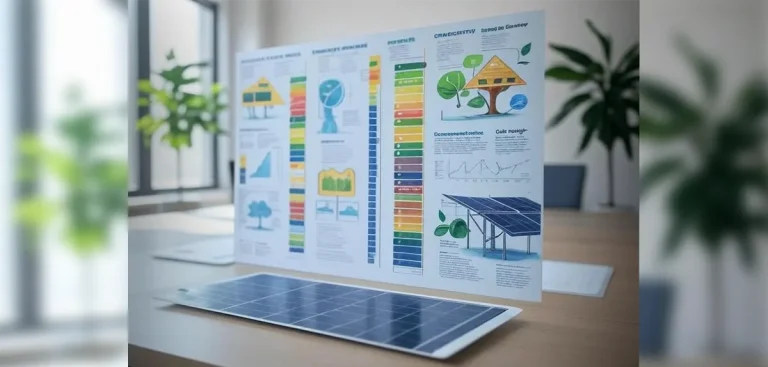
Small solar projects are often the easiest way to bring renewable energy into everyday life. A garden light, shed lamp or charging station may look simple, but this guide to solar panel efficiency helps explain why panel size, sunlight and battery quality still matter.
Not every solar project needs a rooftop installation or a full battery bank. Sometimes the most useful solar upgrade is a light by the driveway, a panel on a shed, a small backup charger or a motion-sensor lamp near the back door. These projects are approachable, affordable and practical — but they still work best when chosen with a little planning.
The charm of small solar is that it solves ordinary problems without adding another cable, outlet or electricity bill.
Start With the Job, Not the Product
The first mistake many buyers make is choosing a solar light or panel because it looks powerful online. A better starting point is the job you want it to do.
Do you need visibility for a pathway? A decorative glow for a garden feature? A security light over a garage? A panel to charge a small battery in a shed? Each use case needs a different balance of brightness, runtime, panel size, battery capacity and placement.
Decorative lighting
Decorative lights are designed to create atmosphere rather than strong visibility. They are useful for patios, flower beds, garden borders, steps, fences and outdoor seating areas.
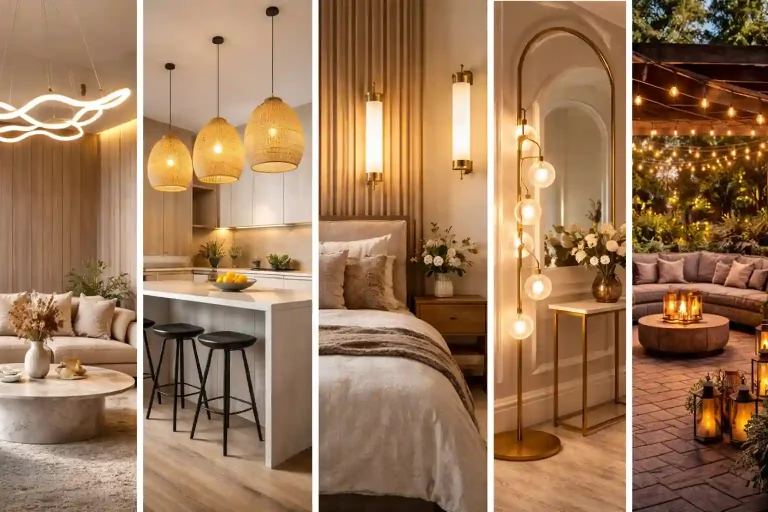
For this type of project, look for warm light, weather-resistant construction and a design that fits the surrounding space. Runtime matters, but brightness usually does not need to be extreme.
Security and motion lighting
Security lights need a different standard. They should activate reliably, produce enough brightness for the area and hold enough charge to work through the night.
Motion sensors, adjustable heads and separate solar panels can be especially useful when the light needs to sit in a shaded spot but the panel needs to be placed where sunlight is stronger.
Shed and workshop lighting
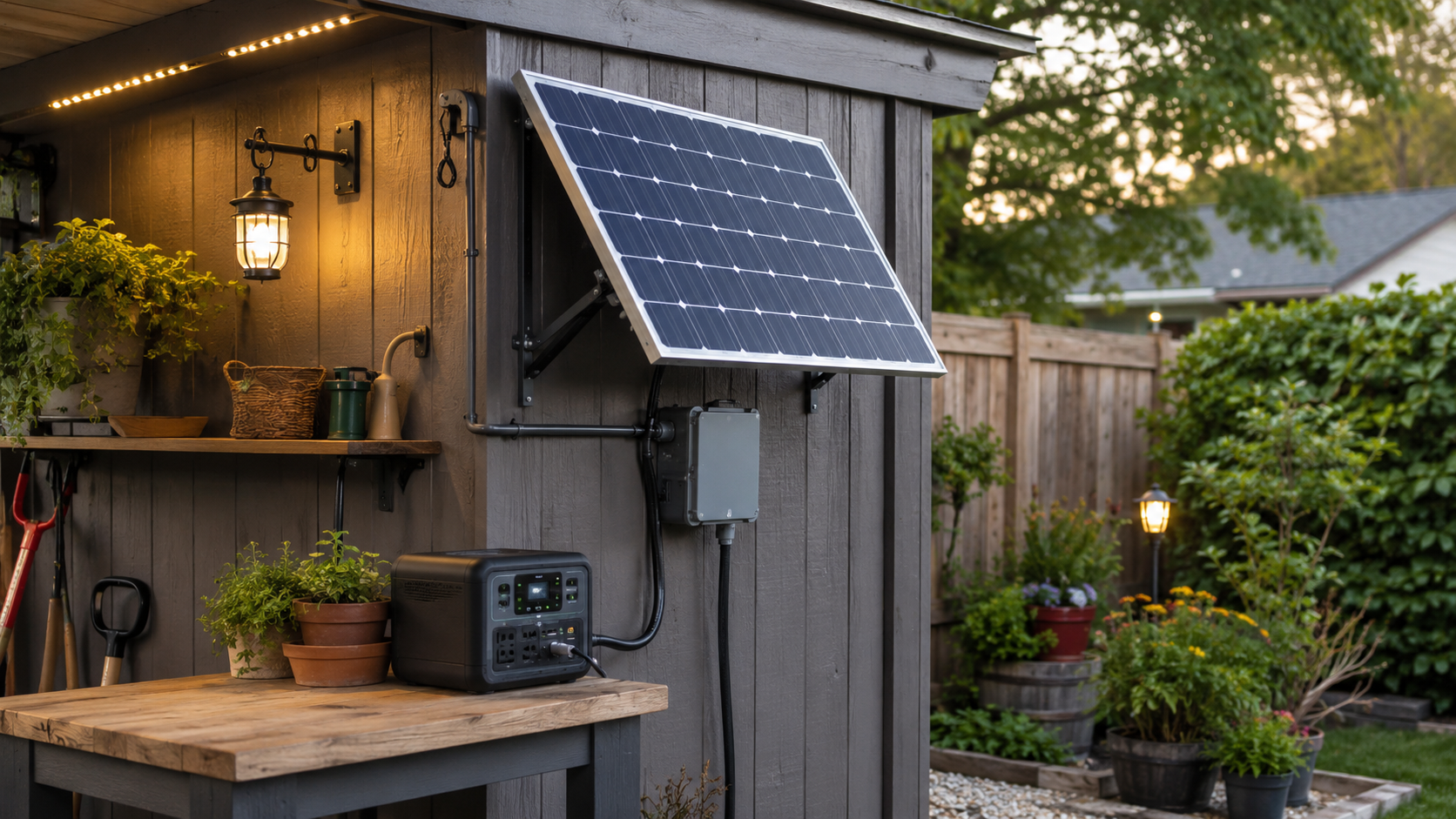
A shed light or small workshop system needs more planning than a decorative garden stake. You may need a separate panel, charge controller, battery and LED fixture, depending on how often the space is used.
The more often you rely on the light, the more seriously you should treat the battery and wiring.
Panel Placement Decides Most of the Result
Small solar products often fail for a simple reason: the panel does not get enough sunlight. It may be hidden under a roof edge, shaded by a fence, placed under a tree or angled poorly for the season.
Look for direct sun, not just daylight
Solar panels can generate energy from daylight, but small panels on garden lights and compact kits perform much better when they receive several hours of direct sun. A product placed in weak shade may work for a few hours, then fade early in the evening.
Separate panel designs can solve shade problems
If the light is needed in a shaded location, choose a model with a separate solar panel connected by a cable. This allows the lamp to stay where it is useful while the panel is mounted in a sunnier position.
A quick placement test
Before fixing anything permanently, place the panel where you think it should go and watch the sunlight across the day. Morning sun, midday sun and late afternoon shade can all change the result.
Brightness: More Lumens Is Not Always Better
Brightness is usually measured in lumens. A higher number means more light, but that does not automatically make a product better. A very bright light may drain its battery faster, create glare or feel too harsh for a garden or patio.
Match brightness to the space
- Pathway markers: low to moderate brightness is usually enough.
- Garden accents: soft, warm lighting often looks better than harsh white light.
- Steps and entrances: choose enough brightness for safe movement.
- Driveways and security areas: stronger output and motion activation may be needed.
- Sheds: brightness should match the tasks done inside.
For outdoor comfort, the best light is not always the brightest one. It is the one that makes the space safer or more useful without wasting stored energy.
The Battery Is Usually the Weak Point
In small solar products, the battery often determines whether the system feels reliable. A good panel can collect energy during the day, but a weak or undersized battery may not hold enough charge for the evening.
Runtime depends on more than the product photo
Manufacturers may advertise long runtimes, but real performance depends on sunlight, temperature, battery age, brightness level and how often motion sensors are triggered.
Replaceable batteries are a useful feature
For garden lights and small fixtures, replaceable rechargeable batteries can extend the useful life of the product. If the battery is sealed and cannot be replaced, the entire light may become waste when storage capacity declines.
A solar light is only as good as its smallest hidden component — and that is often the battery.
Weatherproofing Is Not Optional Outdoors
Outdoor solar products face rain, wind, dust, frost, heat and direct sunlight. A light that works well indoors or under a covered porch may fail quickly when exposed to open weather.
What to check before buying
- Weather-resistant housing
- Sealed switches and charging ports
- Rust-resistant mounting hardware
- Strong ground stakes or wall brackets
- Waterproof cable connections for separate panels
- Battery compartment protection
Cheap stakes are a common failure point
For garden lights, the panel and LED may be fine, but a weak plastic stake can crack in hard soil or cold weather. It is worth checking the mounting design, not just the light output.
When a Small Solar Panel Kit Makes More Sense
Individual solar lights are convenient, but they are not always the best solution. For a shed, greenhouse, chicken coop, gate opener or small outdoor workspace, a compact solar panel kit may provide more flexibility.
A basic kit may include:
- Solar panel
- Charge controller
- Battery
- Fuse or breaker
- LED light or DC load
- Mounting brackets and wiring
This kind of setup requires more care than a plug-and-play garden light, but it also teaches more and can support more practical uses.
Simple DIY Solar Projects Worth Trying
Small solar projects are perfect for learning because mistakes are easier to fix and the cost is usually manageable. The best projects solve a real problem around the home.
Solar path lighting refresh
Replace weak path lights with fewer but better-quality fixtures. Focus on placement, battery access and consistent sun exposure rather than buying the largest pack available.
Shed light with separate panel
Mount the panel outside in sun and run the cable to an LED light inside. This is one of the most useful beginner projects because it clearly shows how panel placement affects performance.
Solar spotlight for a tree or feature wall
Use a separate-panel spotlight so the light can point at the feature while the panel sits in a sunny location. This avoids the common problem of placing the whole fixture in shade.
Small solar charging box
A compact panel, charge controller and battery can create a simple charging station for phones, radios or USB lights. This is useful for camping, workshops or emergency backup.
Common Buying Mistakes
Most small solar disappointments are avoidable. They usually come from trusting the product photo more than the conditions where the product will actually be used.
- Buying a light that is too dim for the area
- Choosing a bright light with too small a battery
- Placing the panel in shade
- Ignoring whether the battery can be replaced
- Using decorative lights for security purposes
- Installing outdoor products without checking weather resistance
- Expecting winter runtime to match summer runtime
- Forgetting that motion lights drain faster in busy areas
A good small solar project is not complicated. It is simply matched to the place, the purpose and the sunlight available.
Final Thoughts
Solar lights and small solar panels can be practical, affordable and enjoyable DIY upgrades. They can improve safety, add atmosphere, power a shed, support a small device or teach the basics of off-grid energy.
The best results come from choosing the right job first, placing the panel carefully, checking battery quality, matching brightness to the space and respecting weather conditions. Start small, test the setup and improve it over time — that is where small solar becomes both useful and satisfying.